Virtual reality used in rehabilitation

Virtual Reality (VR) is increasingly used in rehabilitation by physiotherapists, therapists and other health 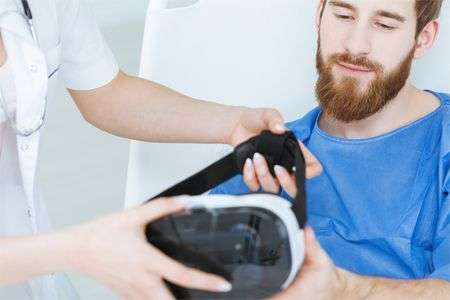 professionals. VR is increasingly used for therapeutic purposes in terms of musculoskeletal rehabilitation, psychomotor development and patients with phobias or anxiety. At Humexe we will introduce the influence that the use of virtual reality may have in rehabilitation.
What is virtual reality?
Virtual Reality (VR) is the simulation of a computer-generated realistic scenario, which can be explored and interacted with by a person. There are two types of virtual reality: immersive (in which there are computer-generated virtual environments which can be interacted with by the person thanks to a hardware device) and non–immersive (in which the person is not fully integrated within the virtual environment). If the person interacts through a keyboard, controller or mouse, the quality decreases.
Why using virtual reality in rehabilitation?
VR is a therapeutic alternative to emulate a real scenario and can be used to train each person’s limitation. It is a complementary tool for rehabilitation sessions in patients with reduced mobility. It is also useful in fall and physical maintenance prevention programmes, geriatrics and neurological rehabilitation for patients with Parkinson’s disease, stroke, multiple sclerosis and cerebral palsy among others.
Virtual reality enables the creation of a series of stimuli thanks to the emulation of a virtual environment. They can be visual, hearing, somatosensory and even smell stimuli.
The therapist has to bear in mind the patient’s limitations to apply the correct virtual reality for the rehabilitation and if the system is compatible for therapeutic purposes. Therefore it is important to conceive virtual reality as a complement to be combined with other rehabilitation techniques.
Virtual reality is a brand-new therapeutic approach. There are many research studies on its effect on the human body and motor function. As mentioned before, it is a personalized therapy that can be adapted to each patient’s limitations to achieve the recovery of their function.